
Choose a task people struggle to finish
MissionDesign.com could become the identity for a small service design practice that improves ordinary but frustrating tasks. The starting point might be booking an appointment, reporting a repair or enrolling in a local course. These are useful areas for a founder because the work has a clear beginning and end. Someone arrives with a need, tries to complete a task and either gets a useful result or has to ask for help.
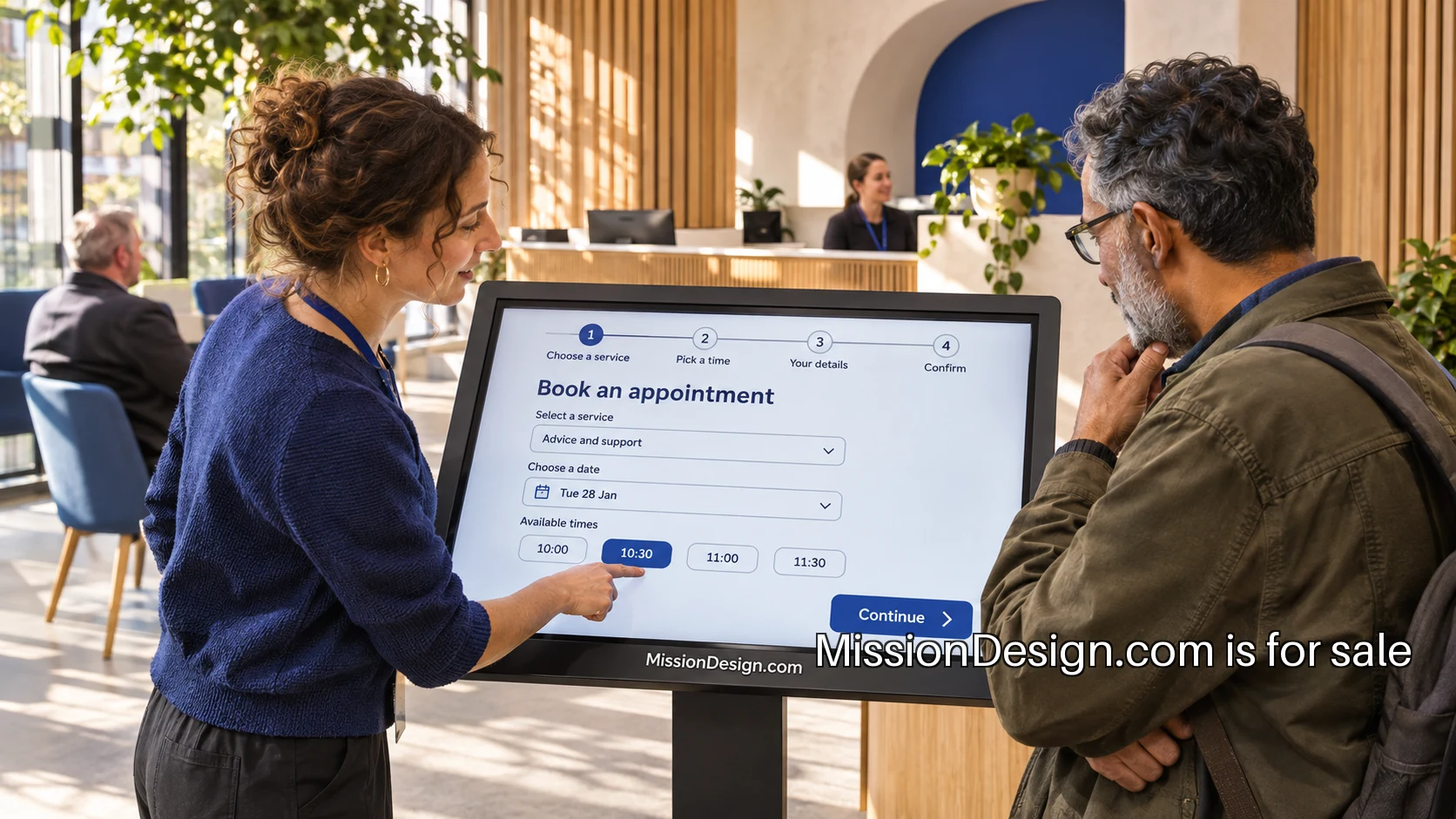
Consider an organization whose customers frequently telephone after submitting an online booking request. A new booking screen might be part of the answer, but the calls could come from uncertainty about what happens next. The practice would study the whole sequence: finding the service, choosing an option, entering details, receiving confirmation and preparing for the appointment. The commission becomes a service problem with several connected parts.
Look beyond the screen
Start by asking staff to show how they handle a real request. Which information arrives incomplete? Where do they copy details between systems? What do they explain on the phone that the website never says? Then invite likely users to walk through their own recent experience. The founder needs both views to distinguish a confusing interface from a process that cannot deliver what the interface promises.
Map the journey in plain language. For each step, record the user's question, the information available and the person or system responsible for the next action. A missing confirmation may be a content problem. An unavailable appointment type may require an operational decision. Keeping those distinctions visible helps the client assign work rather than expecting one redesigned page to solve everything.
Offer a small, complete intervention
A first project could focus on the booking confirmation and the steps immediately around it. The practice might propose a clearer summary, preparation instructions, a way to correct details and a consistent message for delays. Build a prototype with believable content and enough interaction to test the sequence. A participant should be able to make a choice, see its consequence and explain what they expect next.
The GOV.UK guide to moderated usability testing recommends tasks with a clear goal that do not reveal how to complete them. For this example, ask someone to arrange a suitable appointment and find what they need to bring. Avoid telling them to click a particular button, because that removes the navigation decision the team needs to observe.
Include the people a standard demo misses
Recruit participants with different needs and circumstances. Someone may be using a small phone, working with limited time or relying on a screen reader. Others may have difficulty understanding a specialist term that is routine for staff. The founder should plan recruitment around the service's actual audience and record which situations the research has covered.
Accessibility work needs both technical evaluation and people using the service. The W3C's advice on user involvement is helpful for planning that combination. A successful session with one person does not represent every access need. It can still reveal an important obstacle and make the next design decision much clearer.
Make the handover useful to operators
A delivery package should show the proposed experience and what must happen behind it. Alongside interface files, include message content, error cases, responsibility for updates and the questions still requiring a decision. If a confirmation promises a response, identify who produces it and under which conditions. A service is easier to maintain when those commitments are explicit.
Provide examples for ordinary exceptions. What happens if the appointment is cancelled? How does someone update an address? What should the page say when no times are available? These cases often matter more to a user than a polished ideal journey. They also give developers and operational teams something concrete to review before implementation.
Show the reasoning in a case study
The practice's portfolio could tell the story through one difficult task. Show the original confusion, the evidence gathered and a few iterations of the proposed service. Explain why a change was made, what a trial revealed and what still needed work. This is a more useful account than a gallery of isolated screens, because it shows how the founder handles uncertainty.
MissionDesign can sign that body of work without naming a specific technology or interface style. The practice might begin with booking services and later work on applications, support journeys or internal tools. A precise description keeps the offer understandable, while the main name holds together a broader commitment to thoughtful service design. The founder has a clear identity to put on the first proposal and the next case study.
A practical first-client route would be introductions through local service-provider associations and operations consultants. The founder could offer a paid review of one booking journey, with a brief findings meeting for the manager responsible for handling enquiries, then propose a prototype project around the most useful change.